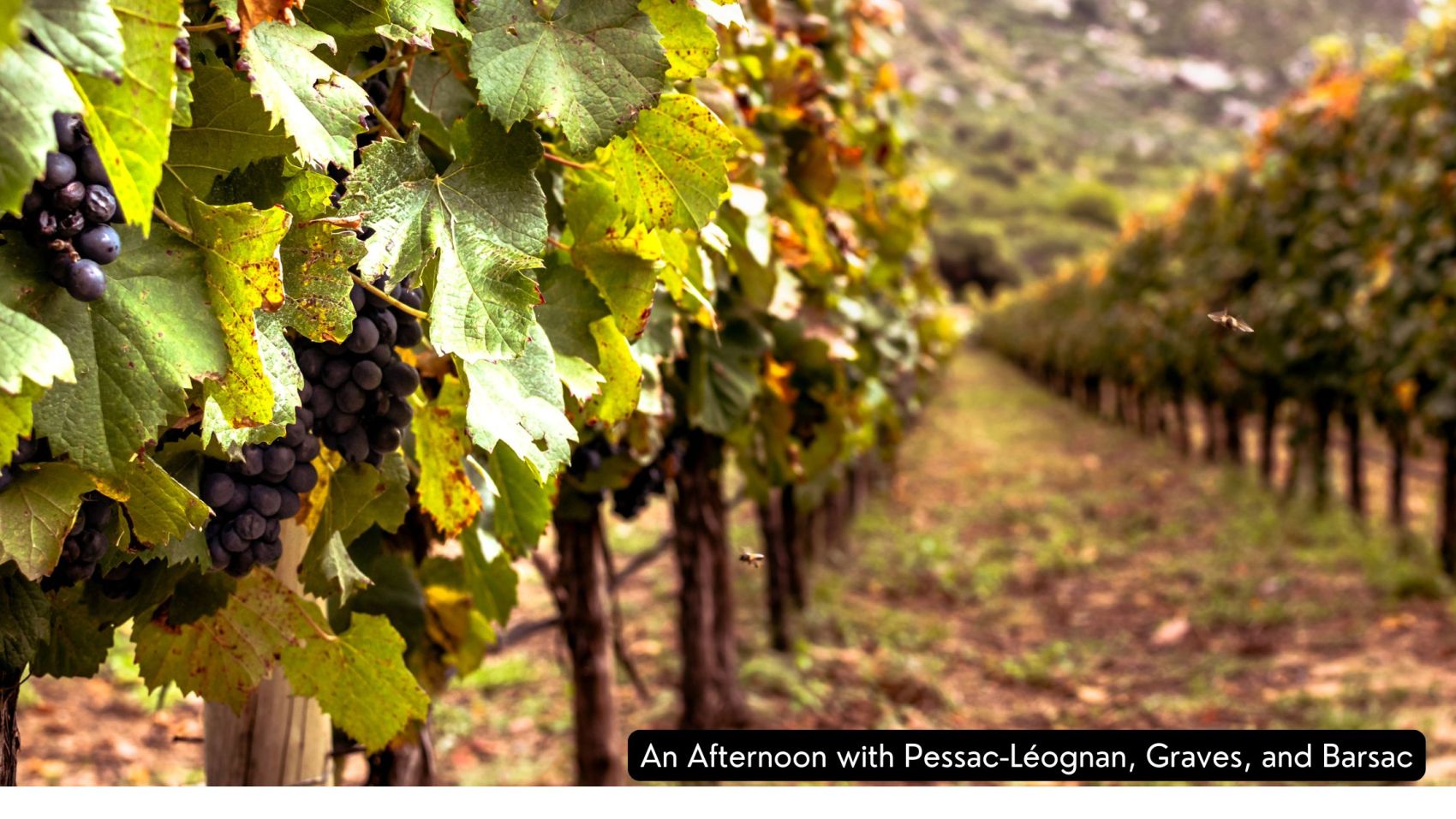
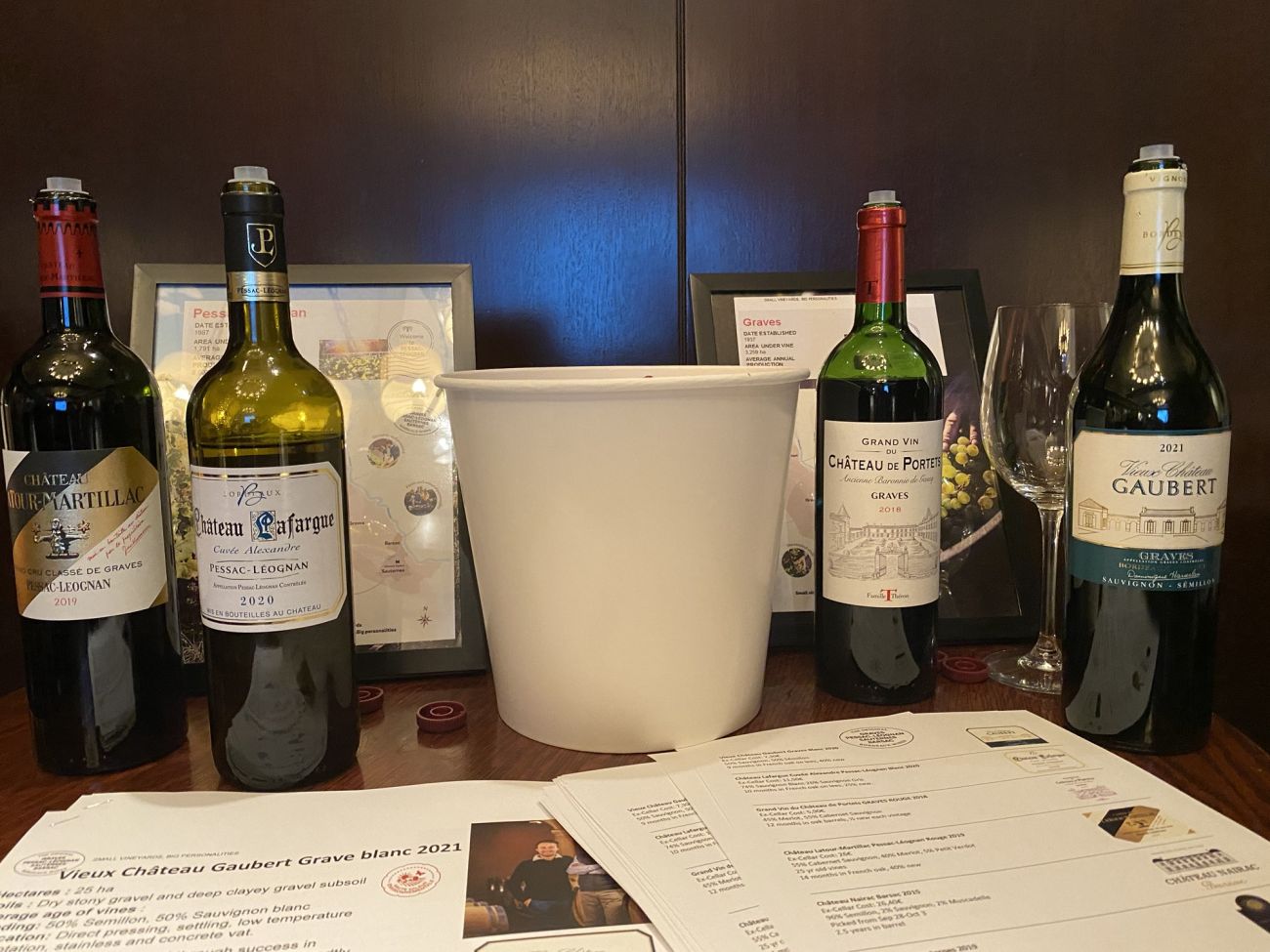
Earlier this year, I had the pleasure of attending a luncheon hosted by Winekey featuring some beautiful winemakers from Pessac-Léognan, Graves, and Barsac. It featured representatives from some smaller vineyards that may not be super familiar in America, namely Château Carbonnieux, Clos Bourgelat, and Château Callac, and some houses that are more recognizable, like Château Guiraud.
Graves, Pessac-Léognan, and Barsac are renowned wine regions in Bordeaux, each with unique characteristics. As a matter of fact, this is the birthplace of Bordeaux wines, with English texts referencing the area all the way back in 1663’s “Ho Bryan” (Haut-Brion). While these particular regions may not be as recognizable as Saint-Émilion or Mèdoc, they are certainly worth looking into as more affordable ways to enjoy Bordeaux wines. Let’s take a look at some of the notable characteristics of each region.
Graves
- Soil Composition: Known for its gravelly soils, which provide excellent drainage and reflect sunlight, benefiting the ripening of grapes.
- Varietals: Primarily produces red wines from Cabernet Sauvignon and Merlot, as well as white wines, as 80% of its green grapes are Sémillon, while Muscadelle and Sauvignon Blanc round out the crop.
- Style: Red wines are often bold with a blend of fruit and earthy notes; whites are typically crisp and aromatic, with good aging potential.
Pessac-Léognan
- Subregion of Graves: It’s the northernmost part of Graves, close to Bordeaux city.
- Classified Growths: Home to some of Bordeaux’s most prestigious châteaux, including several Grand Cru classified growths. Worth buying if you come across any bottles between 2015-2020.
- Aromatics and Complexity: Wines, both red and white, tend to have more structure and complexity, with red wines showcasing dark fruits, cedar, and tobacco, while whites exhibit richness and minerality.
Barsac
- Sweet Wines: Known primarily for its sweet white wines made from Sémillon, Sauvignon Blanc, and Muscadelle, often affected by noble rot (Botrytis cinerea).
- Climate Influence: The region’s proximity to the Ciron and Garonne rivers creates a microclimate conducive to the development of noble rot, leading to concentrated flavors.
- Flavor Profile: Barsac wines are characterized by honeyed notes, stone fruits, and citrus, with a balance of acidity that provides freshness and longevity.
Each region’s distinctive terroir and winemaking traditions contribute to the unique profiles of their wines.
Five Takeaways from My Afternoon with the Vignerons
- Many wines of the area possess an HVE Certification. Standing for “Haut Valeur Certification,” this designation is similar to “certified organic,” but neither as strict nor as expensive to achieve. Proposed as a certification standard in 20002, but not implemented until 2012, the key tenants of an HVE certification are:
- Biodiversity (using cover crops even amongst a monoculture of vineyards)
- Phytosanitary Strategy (low disease pressure)
- Sustainable Management of Fertilization and Carbon
- Sustainable Irrigation Management
- Most of the grapes grown in Sauternes and Barsac are grown as organically as possible due to noble rot. The mold botrytis cinerea is necessary to achieve the high sugar levels for the regions most recognizable wines, and cannot be done if the grapes are sprayed with pesticides.
- Château Carbonnieux holds some great American history. Thomas Jefferson visited for 2 days during his ambassadorship with France and planted a Pecan tree during his stay. The tree was the oldest on the property until a particularly bad drought cracked the tree in 2022.
- At 100 hectares, roughly 250 acres, Château Guiraud is one of the largest wineries of the region, and was the first to be certified organic in 2011.
- According to the vignerons, the best time to visit Sauternes is in the winter, when you can try all the different passes of the wines as they wait to be bottled. You can see some suggestions below for travel plans in the region.
I’ve never had the chance to visit Bordeaux, but visiting these quieter sub-regions will certainly be on my list. The wine, the people, and the landscape have all captured my heart!

- North Farm: A Luxury Farm Stay Near Traverse City - October 5
- Championing Wine and Wellness in Temecula - June 22
- 9 Best and Unique Things to do in Leelanau County Michigan - June 16
- Kenosha: The Greatest Family Day Trip from Chicago - April 27
- A Unique and Luxurious Couples Getaway from Chicago near Lake Geneva - April 19
- I’m A Nationally Published Writer and Other Updates - March 28
- Celebrating Women in Wine on International Women’s Day - March 7
- Eight of the Best Weekend Trips from Chicago - January 27
- Unexpected (and Mostly Free!) Chicagoland Indoor Activities in Winter - December 31


Leave a Comment
You must be logged in to post a comment.